
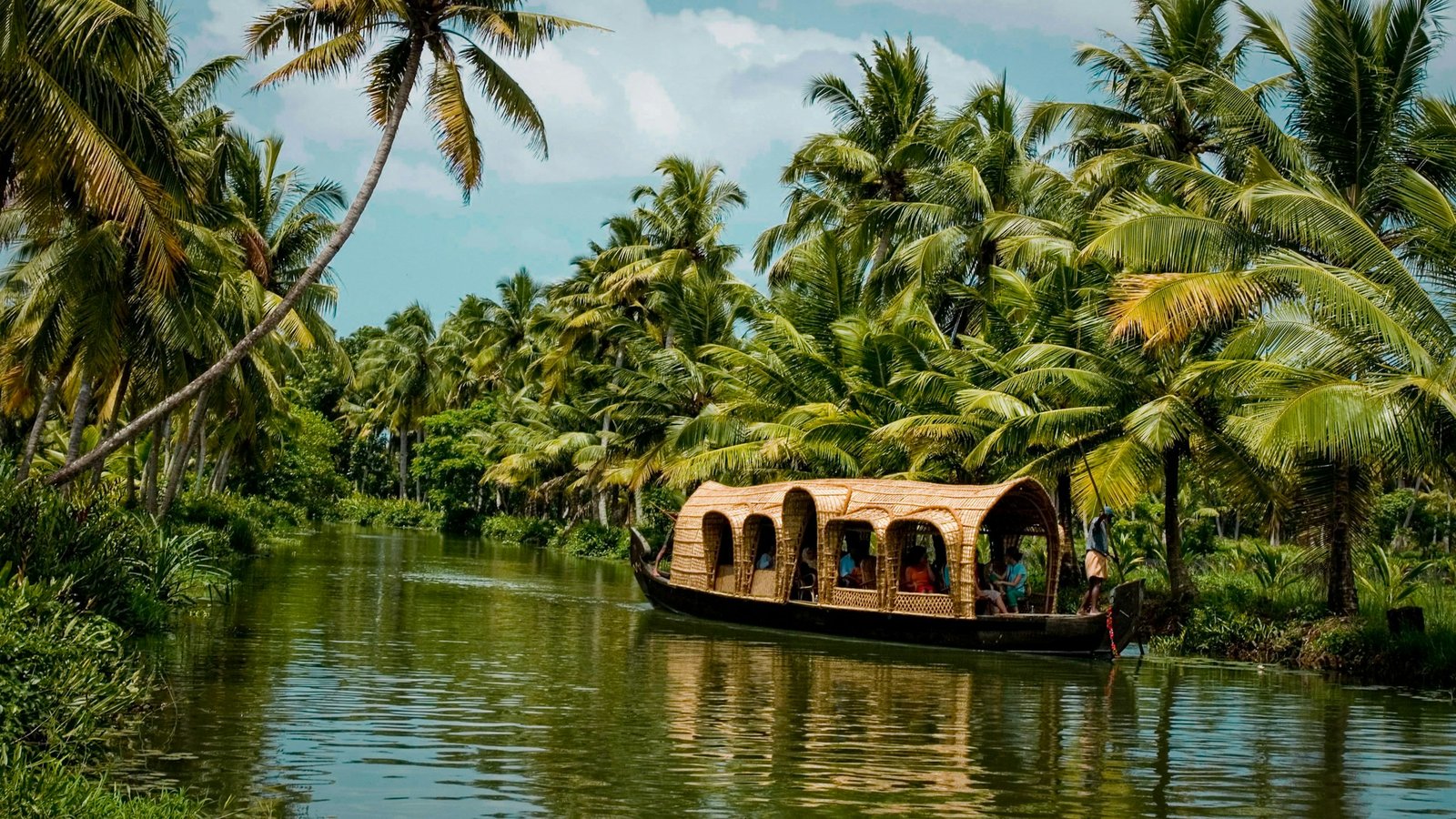
A houseboat is one of those experiences that sounds like a gimmick and turns out to be the highlight. India has two great houseboat traditions — Kerala's and Kashmir's — and they're completely different animals. Knowing what each is actually like helps you enjoy it for what it is.
Kerala's kettuvallam is a converted rice barge that cruises the backwaters — it moves, drifting past villages and paddy fields, usually with a crew who cook fresh Kerala food on board, and it typically moors for the night. Kashmir's Dal Lake houseboat is grander and largely stationary — ornate carved cedar, sitting rooms and verandahs, reached by shikara, more floating heritage hotel than cruise. One is a journey; the other is a stay.
Space is cosy, the pace is slow, and that's the point — this is not a trip for people who need constant activity. Meals are often a highlight (freshly cooked, local). Connectivity and power can be limited, especially on the move in Kerala, so treat it as a chance to switch off rather than a place to work. Evenings — the water still, the birds settling, the light going — are what people remember.
A light change of clothes and sleepwear, a warm layer for the evening (both backwaters and lake cool down after dark), mosquito repellent (especially Kerala), a power bank, and any medication. Keep it to a small bag; storage is limited and you won't need much for a night.
Houseboats vary a lot in quality and upkeep. It's worth going through someone who knows the reputable operators rather than picking the cheapest option on arrival — the difference between a well-run boat and a poorly kept one is the difference between the highlight of the trip and a long, uncomfortable night.
A night on the water is the kind of thing you book a whole trip around. On GoRaahi's Kerala and Kashmir journeys we put you on houseboats worth remembering — the experience, done right.
Read next: Kerala, Slowly · Kashmir: The Valley, Honestly